Building an online business asset might not feel like the obvious next move. Looking back from 2035, we learned something very different. People kept starting new businesses instead of building something they owned. Another program appeared. Another income plan...
Is Extreme Weather Getting Worse? What History and Science Reveal
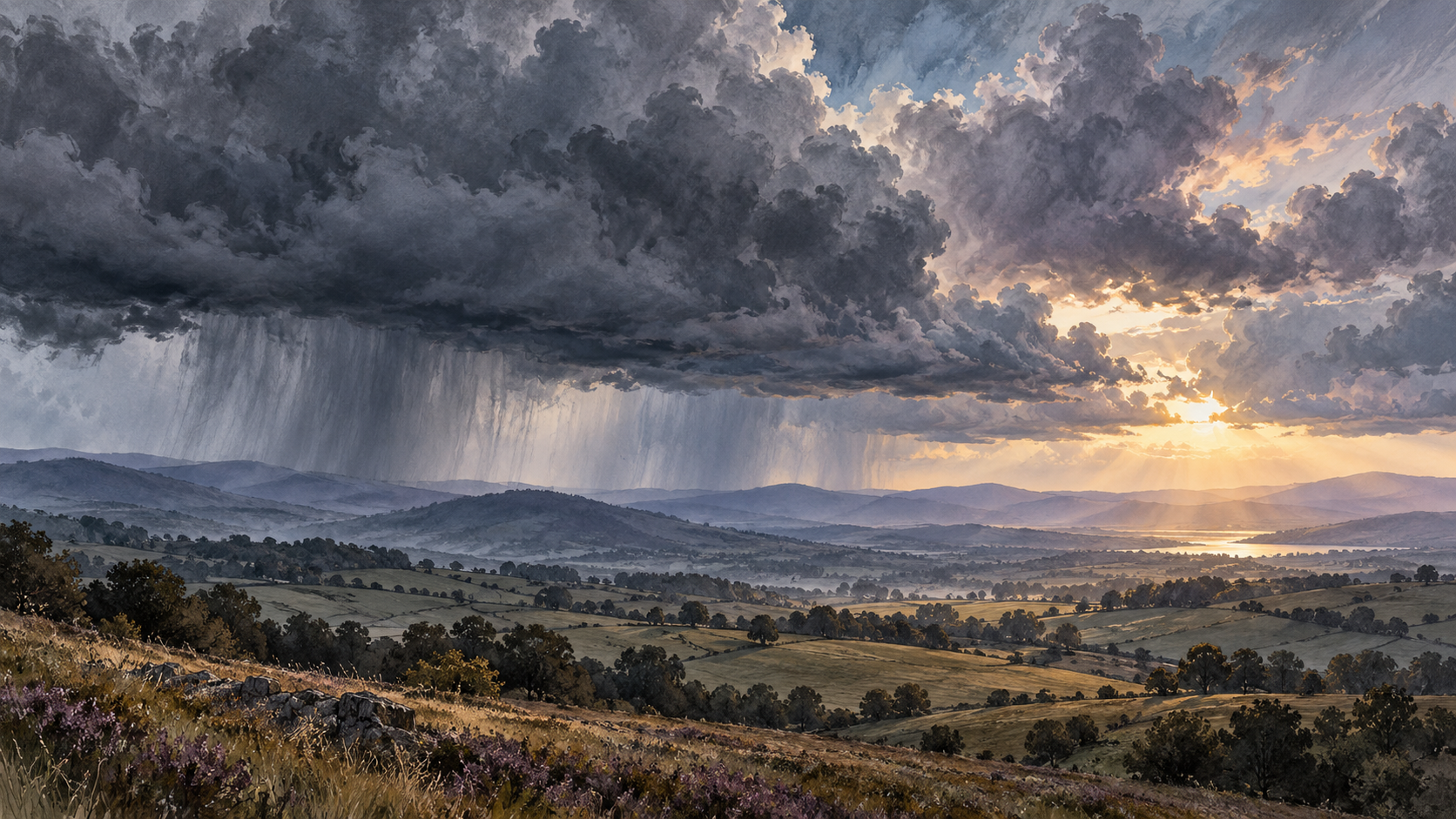
Your grandfather remembered terrible storms. Your phone shows another disaster every morning.
Both can tell the truth. Neither alone answers whether extreme weather is increasing.
That question needs something stronger than frightening pictures or childhood memories. It needs records, fair comparisons, and clear explanations.
The evidence shows increasing heat extremes and heavy rainfall across many regions. Cold extremes have generally declined, while other hazards show more mixed patterns.
But imagine the hardest reader to convince: a retired farmer named Martin.
Martin represents a skeptical reader, rather than a real interview subject. He remembers droughts, flooded fields, and forecasts that missed the mark.
He distrusts anyone who treats every storm as proof of climate change. Show him historical disasters, and he sees evidence that weather always varied.
He finds one historical pattern especially convincing: confident experts sometimes get things wrong.
That makes his central challenge fair. How do we separate real changes from better reporting and selective memory?
We start by accepting something Martin already knows. Extreme weather existed long before modern industry.
The question concerns changing frequency, strength, location, and duration.
History helps us examine how people answer difficult questions about hidden risks. However, five selected stories cannot establish a rule without exceptions.
The following cases span public health, farming, industrial pollution, and atmospheric science. They share useful features, but they do not have identical structures.
Each involves a familiar explanation, challenging evidence, and arguments about what counts.
Their outcomes support one practical lesson: test explanations against evidence.
That lesson also protects us from overstating the climate case. Past mistakes do not make every new warning correct.
We should ask what people measured, what changed, and what alternatives explain.
With that standard, history becomes useful rather than decorative. It helps us examine today’s claims without demanding blind trust.
1. London, 1854: Familiar Explanations Can Hide the Real Cause
During London’s cholera outbreaks, many doctors blamed foul air. They called this explanation the miasma theory.
John Snow argued that contaminated water spread the disease. His claim challenged a widely accepted explanation of how illness traveled.
The skeptical response had a clear logic. Dirty neighborhoods smelled terrible, and people there became sick.
Some critics also argued that river water would dilute harmful material. They considered the Thames too large for dangerous contamination to matter.
Snow looked beyond those surface connections. He compared households receiving water from different suppliers.
The suppliers served overlapping neighborhoods but drew water from different river locations. That gave Snow a stronger comparison than simply studying poor versus wealthy streets.
His work supported waterborne spread, though acceptance took longer than popular retellings suggest. His explanation had not gained broad acceptance when he died in 1858.
The climate parallel concerns how we compare evidence.
Imagine comparing two photographs of the same river, decades apart. One shows a flood, while the other shows calm water.
Those pictures cannot establish a trend. You need rainfall records, river measurements, and information about local changes.
Now imagine comparing annual flood losses. More buildings beside the river could increase losses without stronger storms.
Martin would rightly challenge either shortcut. Snow’s example supports that demand for better comparisons.
The useful pattern involves separating factors that occur together. A convincing explanation must survive tests against competing explanations.
This case also challenges a lazy argument sometimes used in climate debates.
Snow opposed the prevailing view and helped overturn it. That does not mean opposing experts automatically makes someone another Snow.
His evidence mattered more than his outsider status.
Apply the same rule today. Neither official standing nor confident disagreement replaces a fair test.
Historical comparisons should sharpen our questions. They should never decide the answer before we examine the measurements.
2. America’s Great Plains: Good Years Can Teach the Wrong Lesson
During nineteenth-century western expansion, some promoters offered settlers a comforting claim. Farming itself would bring more rain.
The slogan was simple: “rain follows the plow.”
Supporters used it to answer concerns about drought across the Great Plains. Cultivation supposedly helped make the region more suitable for farming.
Severe droughts during the 1890s undermined that promise. Farmers could improve their tools, but they could not guarantee rainfall.
Here, the doubters questioned warnings about dry conditions. Their reassuring explanation turned farming expansion into supposed protection against drought.
The outcome exposed the weakness of that reasoning. A hopeful story could not remove the region’s weather risks.
This case offers a useful warning about choosing our starting point.
Imagine buying a farm after several unusually wet seasons. Those years might shape your expectations about normal rainfall.
Now imagine buying after several unusually dry seasons. You might reach the opposite conclusion about exactly the same land.
Neither experience alone reveals the full range of conditions.
The climate parallel concerns short records and selective comparisons. A recent wet year cannot settle whether long-term drought risk has changed.
Likewise, one dry summer cannot establish a lasting trend.
This lesson cuts both ways. Anyone claiming worsening weather must resist choosing only convenient dates.
Anyone dismissing change must follow the same rule.
Martin’s memory of earlier droughts belongs in the discussion. It provides a reason to examine longer records carefully.
However, an earlier disaster answers only whether something happened before. It cannot reveal whether similar events now happen more often.
Imagine a road with three crashes this year. Finding one crash from 1920 does not establish today’s accident rate.
You need counts, traffic levels, and comparable periods.
Weather comparisons require similar care. Define the event before counting it, and keep that definition consistent.
The historical lesson does not promise that every warning proves correct. It shows why reassuring claims deserve the same testing as alarming ones.
Neither optimism nor fear can substitute for a sufficiently long record.
3. Japan’s Minamata Disaster: An Unfinished Explanation Can Still Reveal Danger
In 1956, researchers investigated a strange illness around Japan’s Minamata Bay. They linked it to seafood containing a harmful metal.
Identifying the exact substance took longer.
By 1959, researchers focused on organic mercury. Opponents argued that the factory used inorganic mercury, not organic mercury.
That objection sounded specific and technical. It challenged how the suspected poison could enter the bay.
Later research found methylmercury in shellfish and factory process residues. The production process could create the harmful compound.
The National Institute for Minamata Disease also documents a damaging delay. Chisso continued discharging wastewater after recognizing its role in the illness.
This case concerns the difference between incomplete knowledge and absent evidence.
Consider a household leak. You might identify the wet wall before finding the cracked pipe.
You should keep investigating the pipe. However, uncertainty about its exact location does not make the wall dry.
Climate questions also involve different levels of certainty.
We can ask whether temperatures have changed. We can separately ask how much warming affected one particular storm.
Those questions require different evidence. Uncertainty about the second does not automatically erase evidence answering the first.
The reverse also holds. Strong evidence of warming does not establish every claim about every storm.
Martin deserves that distinction. Otherwise, broad certainty can conceal weak claims about local events.
The parallel here has clear limits. Mercury poisoning and weather involve different processes, timescales, and research methods.
Minamata cannot prove a climate trend. Nor does it justify treating every climate skeptic as dishonest.
Its value lies in exposing a reasoning mistake. Missing details do not always overturn the larger explanation.
The practical question becomes more precise: which uncertainty actually changes the conclusion?
Perhaps researchers disagree about the size of an effect. That differs from finding no effect at all.
Good reporting should explain that difference plainly. Readers should know what evidence supports, what remains unclear, and why it matters.
4. The Ozone Hole: Human Action Can Change the Outcome
During the 1970s, scientists warned that CFC chemicals could damage atmospheric ozone. Industry representatives urged restraint, citing incomplete data and unresolved questions.
These chemicals served useful purposes, including refrigeration and aerosol sprays. Their everyday usefulness did not answer questions about their atmospheric effects.
In 1985, British Antarctic Survey scientists reported major springtime ozone losses. Satellite observations confirmed the broad scale of the Antarctic problem.
Growing evidence helped drive the 1987 Montreal Protocol. Governments later strengthened controls to phase out ozone-depleting chemicals.
The outcome matters for two reasons.
First, research confirmed that human activity could damage a vast atmospheric system. Second, coordinated action changed the path of that damage.
The climate parallel concerns invisible causes and delayed effects. People cannot judge atmospheric chemistry simply by looking outside.
A clear sky tells you little about ozone chemistry. A pleasant afternoon tells you little about long-term temperature trends.
Both questions demand measurements beyond immediate experience.
However, the ozone story also challenges the claim that history always ends identically.
People changed their behavior. Governments changed rules, and industries changed products.
That means the response belongs inside the story. We cannot treat future harm as fixed while ignoring possible action.
Think about repairing a roof after discovering loose tiles. If the repair prevents damage, the original warning still had value.
A successful response does not prove that the danger never existed.
Martin might ask another fair question: could climate action work just as easily?
This historical case cannot answer that. Different problems involve different tools, costs, and practical limits.
The useful lesson concerns how we judge warnings after people respond.
We need to ask what would likely have happened without that response. Simply comparing the warning with the final outcome can mislead.
History offers evidence that choices matter. It does not offer a guarantee about every proposed solution.
That distinction makes the argument stronger. It keeps us focused on mechanisms, measurements, and results.
5. Europe, 2003: Old Weather Can Acquire New Odds
Europe’s 2003 heatwave brought an important scientific question into sharp focus.
Did human influence make such extreme heat more likely?
A reasonable objection was that natural weather could produce an exceptional summer. Researchers acknowledged that possibility rather than pretending it did not exist.
The landmark study explicitly avoided a simple either-or explanation. It examined how human influence changed the event’s probability.
The researchers concluded that human influence had very likely at least doubled the risk. Their estimate applied to a defined summer-temperature threshold across a European region.
This case differs from the earlier examples. The objection formed part of the scientific method itself.
We do not need to invent a dismissive historical opponent. The researchers addressed the strongest version of the natural-variation argument directly.
That gives Martin a better answer than another dramatic photograph.
Yes, unusual heat could happen naturally. Human influence could still make that heat substantially more likely.
Imagine a die that rolls six more often after someone changes its balance. Six appeared before the change, so its existence proves nothing.
The relevant question concerns how often it appears across many rolls.
Climate research involves far more complex tests than rolling dice. Still, the example explains why historical precedents cannot settle changing risk.
The fact that heatwaves existed centuries ago remains true. It does not establish that their likelihood has stayed constant.
Longer records support the broader heat finding. Hot extremes have increased across most land regions since the 1950s.
Cold extremes have generally become less frequent and less severe. Human-caused climate change drives these broad temperature changes.
That second finding deserves attention. An honest answer must include extremes that decline.
Heavy rainfall presents another measured change across many well-observed land regions. Drought patterns depend more strongly on location and the drought measure.
Tropical cyclones require further distinctions. The global share of major cyclones likely increased over four decades.
That finding does not establish an increase in total global cyclone numbers.
Precision gives the evidence its meaning. “Everything is getting worse everywhere” throws that precision away.
What the Historical Pattern Actually Tells Us
These cases show familiar weaknesses in how people judge changing risks.
We lean on personal experience. We favor explanations that fit what we already expect.
Sometimes we demand certainty where careful comparisons offer strong evidence. Sometimes we accept frightening claims without demanding enough evidence.
History does not remove either temptation.
Nor can five chosen examples prove that one outcome always follows. Choosing only successful warnings would hide warnings that failed.
The strongest conclusion comes from measurements of weather itself.
Several important weather extremes are increasing, especially heat and heavy rainfall. Others show regional differences, uncertain trends, or declines.
Historical parallels help explain how we might misread those findings. They do not replace the findings.
The skeptical reader should keep asking hard questions:
- Which weather hazard does this claim describe?
- Which region and period does the evidence cover?
- Does it measure frequency, strength, duration, or financial damage?
- Could better reporting or changing land use explain part of the pattern?
- What evidence would make the author change their conclusion?
These questions improve the discussion without forcing a predetermined answer.
They also reveal why the headline question needs care. “More extreme weather” combines hazards that do not move together.
A useful article should unpack that phrase before drawing conclusions. A useful reader should expect the same care from every side.
Martin does not need to forget the storms he remembers. He needs a fair way to compare those storms with today’s record.
We all do.
The evidence already identifies changes; that part does not require predicting tomorrow’s weather. Future outcomes still depend on physical conditions and human choices.
Start with one weather claim that matters where you live. Find its source, check the timeframe, and examine what the measurements show. Let history improve your questions, and let evidence shape your answer.